Largo do Curvelo
Named for the Baron of Curvelo
The square takes its name from a former resident of the surrounding area, the Baron of Curvelo. The neighborhood itself grew up around the Convento de Santa Teresa, founded in the 18th century — one of the first areas settled outside Rio's original city core, and home to the city's upper class in that era. Today the square sits at the top of Santa Teresa's hill, a meeting point for residents rather than a tourist plaza: cobblestone streets, colonial-era buildings, and a bohemian, art-covered character that's grown up around it since.
The Santa Teresa Tram
Bonde de Santa Teresa — running since 1897
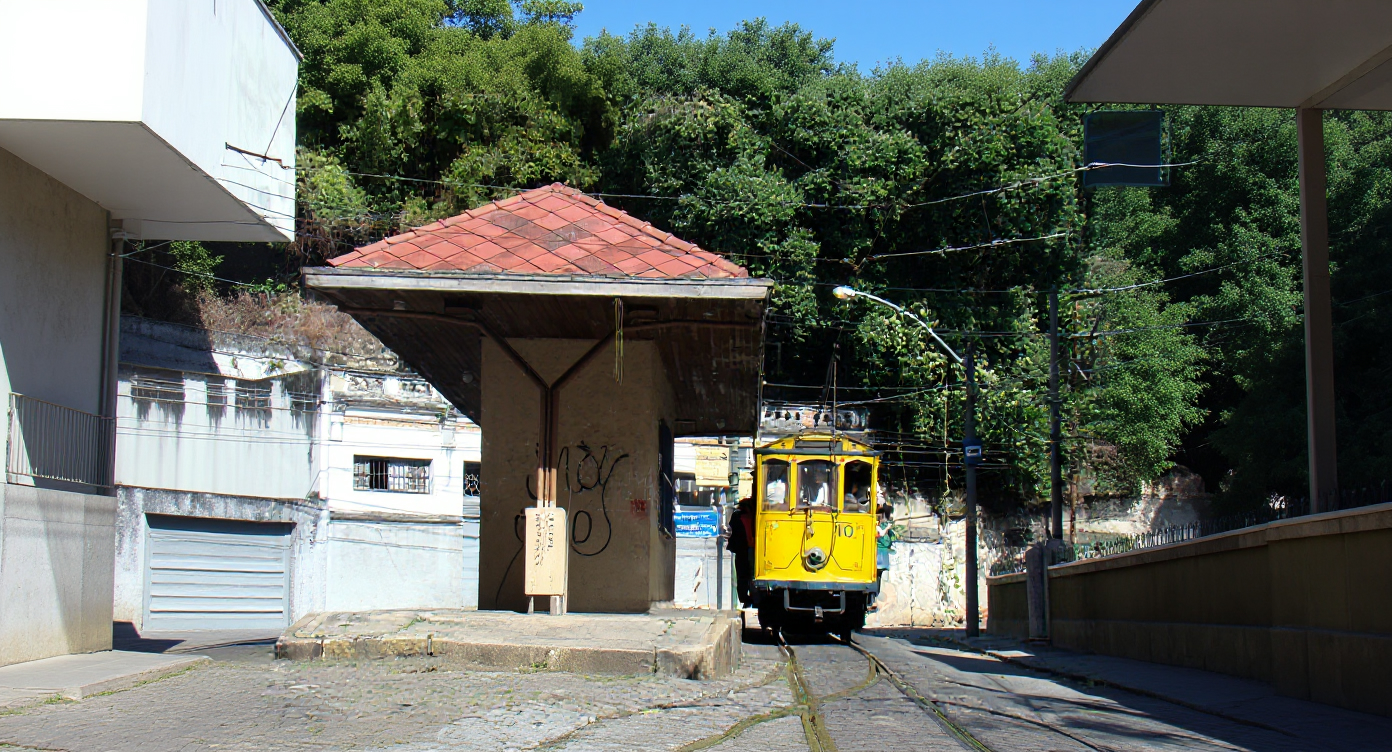
The tram first reached the neighborhood in 1872, as Santa Teresa's old estates were subdivided into streets. Its electric line was inaugurated in 1897, making it the oldest electric tram still operating in Latin America. It crosses into the city center over the Arcos da Lapa — the old Carioca Aqueduct — and today is the only tram line still running in Rio; every other line in the city stopped by 1968. Paused for renovation for several years, it came back into service in 2015, still painted the same classic yellow.
.jpg)